In short
Sun position follows from date, time and the coordinates of the site; the standard method comes from the US weather service NOAA. For images two questions matter: which facade should catch light, and how long the shadows may be. A shading study is something else — it needs neighbouring buildings, terrain and an assessment against local rules.
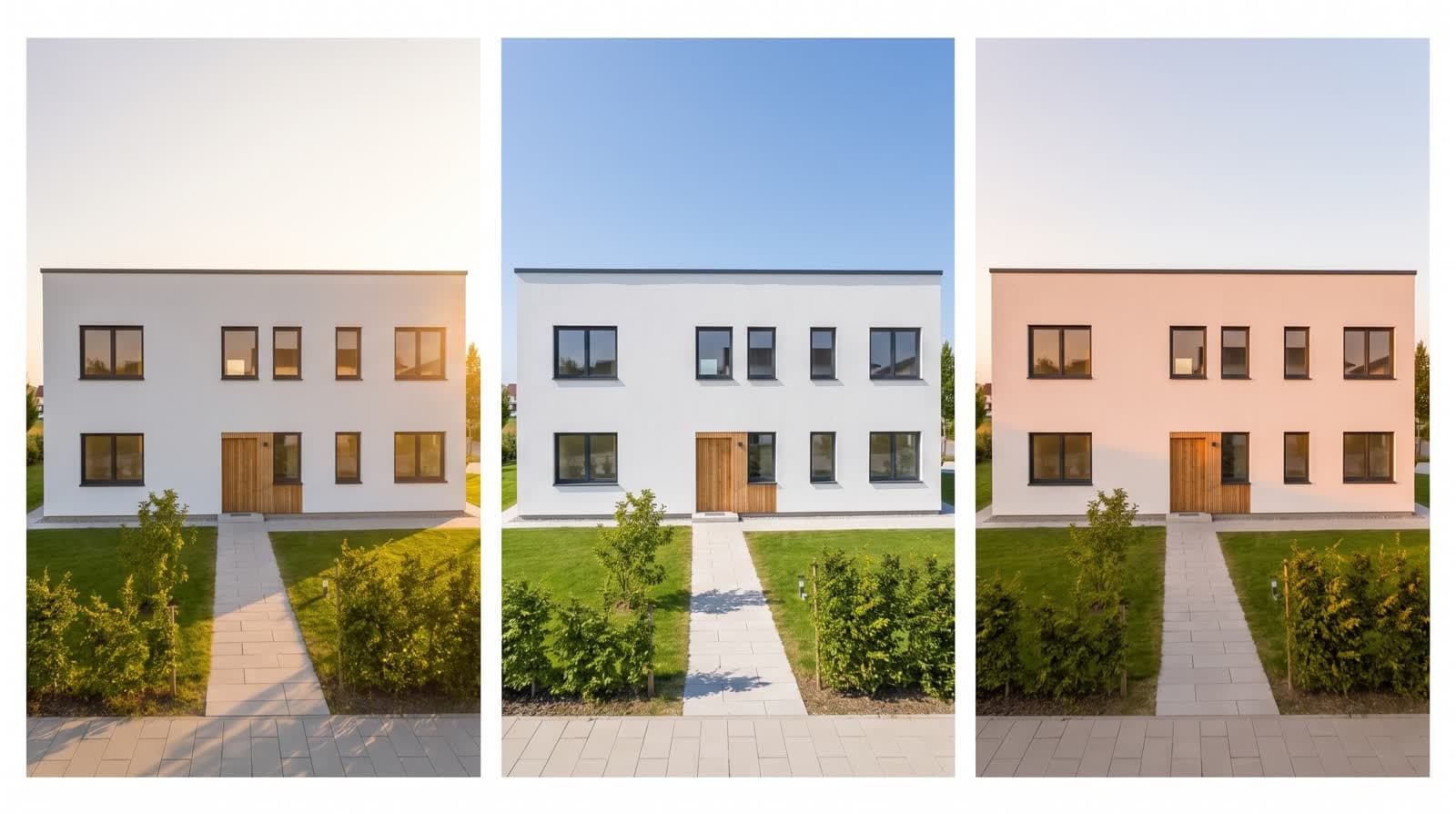
Which hour for which purpose
Morning, 8 to 10
Long shadows, soft light. Good for east facades and for depth.
Midday, 11 to 14
High sun, short shadows. Good for aerials, poor for facade modelling.
Afternoon, 15 to 18
The classic for west facades and terraces: relief without blown contrast.
Blue hour
Interiors glow, the facade recedes. Strong for marketing, weak for material.
Time zones and daylight saving
The calculation uses true solar time; the clock on the wall shows zone time with a summer offset. In Central Europe the sun stands south around 13:30 in summer, not at 12:00.
So check the position in the model rather than trusting the hour. A readout of azimuth and elevation makes this obvious in seconds.
What an image does not do
A shading study answers how much direct sun reaches a neighbouring window on a given day. That needs real neighbours, terrain and an assessment against the rules of the jurisdiction.
A visualisation shows light; it does not measure it. Use images for communication and a study for the authority.
Questions and answers
Which hour for competitions?
Early afternoon in June is common, because shadows show depth without darkening the facade. Check the brief: some procedures prescribe date and time.
Is this a shading study?
No. A study needs neighbouring buildings, terrain and a formal assessment.
Why are my shadows on the wrong side?
Usually the north angle of the project is wrong. A plan with north to the left needs a 90-degree rotation.
Does it work outside Europe?
Yes. The formulas are global as long as coordinates and time zone are right.
Sources
- NOAA Global Monitoring Laboratory: Solar Calculator
- Austrian Institute of Construction Engineering: OIB guidelines
This article also exists in German: read the German version.